

Planning a vacation is exciting — from picking the destination to choosing where to stay. But one key decision can shape your entire travel experience: selecting the best car rental for vacation. The right vehicle ensures comfort, flexibility, and peace of mind throughout your journey.
Whether you’re traveling with family, friends, or solo, this complete guide will help you choose wisely, avoid common mistakes, and make the most of your trip.
1. Why Renting a Car for Vacation Makes Sense
Choosing a car rental for vacation trips offers freedom that public transport can’t match. You can explore at your own pace, take spontaneous detours, and visit hidden gems far from the usual tourist routes.
Top benefits of renting a car for vacation:
- Flexibility: Travel anywhere, anytime.
- Comfort: Enjoy personalized space and climate control.
- Cost Efficiency: Split fuel and rental costs among travelers.
- Convenience: No need to depend on taxi apps or schedules.
For families and groups, a rented car often turns out more economical than multiple ride bookings.
2. Choose the Right Type of Vehicle
Selecting the right car is essential when searching for the best car rental for vacation. It should match your destination, trip duration, group size, and luggage needs.
Here’s a quick guide to help you decide:
| Trip Type | Recommended Vehicle | Why It’s Ideal |
|---|---|---|
| City vacations | Compact or economy car | Easy to park, fuel-efficient |
| Family trips | SUV or minivan | Extra luggage space, comfortable seating |
| Road trips | Sedan or crossover | Smooth highway performance |
| Mountain destinations | 4×4 or SUV | Stability and control on rough terrain |
| Luxury holidays | Premium or convertible | Stylish and comfortable ride |
Always check the mileage limit, luggage capacity, and air conditioning features before booking.
3. Compare Car Rental Prices and Policies
Don’t just settle for the first option that appears online. Comparing deals across different platforms helps you find the most affordable car rental for vacations without compromising quality.
When comparing, look at:
- Base rental rate (daily or weekly)
- Fuel policy (full-to-full is best)
- Insurance coverage (basic vs. comprehensive)
- Mileage limit
- Additional driver charges
Some companies offer discounts for early bookings or longer rental durations, so plan ahead for better savings.
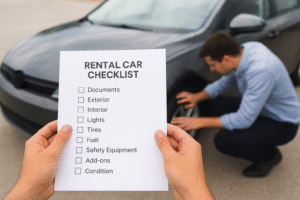
4. Inspect the Car Before You Drive Away
Before starting your journey, take a few minutes to inspect the car thoroughly. This step helps you avoid disputes over damages later.
Checklist before pickup:
- Check for scratches, dents, or broken lights.
- Verify tire pressure and fuel level.
- Test headlights, wipers, and air conditioning.
- Capture photos or videos of the car’s condition.
- Confirm that all existing damages are recorded in your agreement.
A careful inspection ensures you only pay for what you use — nothing more.
5. Understand Insurance and Deposit Requirements
Before signing the agreement, understand what’s included in your rental package. Most vacation car rentals include basic insurance, but you may need to pay extra for full coverage.
Common types of coverage:
- Collision Damage Waiver (CDW) – Covers damage to the vehicle.
- Theft Protection (TP) – Covers loss from theft or attempted theft.
- Third-Party Liability (TPL) – Covers damage or injury to others.
Also, ask about deposit amounts and refund timelines. Some agencies block a security amount on your card, which is released after the car is returned safely.
6. Pack Smart and Plan Ahead
When preparing for your trip, consider both comfort and safety.
Vacation car rental checklist:
- Phone mount or GPS device
- USB charger and power bank
- Snacks and bottled water
- Emergency kit and first aid box
- Travel pillow for long drives
Also, plan your route in advance — check for toll roads, rest stops, and fuel stations along the way.
7. Check Local Driving Rules
If you’re traveling internationally or to a different state, familiarize yourself with local driving regulations.
Tips for safe vacation driving:
- Always carry your driver’s license and rental papers.
- Follow local speed limits.
- Don’t use your phone while driving.
- Wear seat belts at all times.
Knowing the basics of local traffic laws ensures a stress-free experience on unfamiliar roads.
8. Avoid Hidden Fees
Some travelers end up paying more than expected because of hidden charges. Review your contract carefully to avoid surprises.
Common extra fees to watch for:
- Late return penalties
- Cleaning or fuel refill fees
- GPS or child seat rentals
- One-way drop-off fees
To minimize costs, return the car clean, on time, and with a full tank if required.
9. Plan for Fuel Efficiency
When choosing the best car rental for vacation, fuel efficiency should be a top priority. Smaller cars generally consume less fuel, but if you’re traveling with more people, a diesel or hybrid SUV can also be economical.
Driving tips to save fuel:
- Avoid sudden acceleration.
- Use cruise control on highways.
- Maintain steady speeds.
- Check tire pressure regularly.
Efficient driving can save you a surprising amount on long-distance trips.
10. Return the Car Properly
As your trip ends, return the vehicle in the same condition you received it.
Before returning:
- Refill the fuel tank.
- Clean up any trash or dirt.
- Take final photos for proof.
- Get a signed return confirmation from staff.
This ensures your security deposit is refunded smoothly and no extra charges appear later.
Conclusion
Choosing the best car rental for vacation isn’t just about price — it’s about finding the right balance between comfort, safety, and convenience.
Plan ahead, read the fine print, and always inspect the vehicle before driving off. Whether you’re exploring scenic highways, beaches, or mountain roads, the right rental car can transform your trip into an unforgettable adventure.
So take your time, choose wisely, and enjoy the open road — your vacation awaits!
Frequently Asked Questions (FAQ)
Q1. What is the best type of car to rent for vacation?
It depends on your travel plans — compact cars for city trips, SUVs for family vacations, and sedans for long-distance drives.
Q2. Is it cheaper to rent a car for a week or per day?
Weekly rentals usually offer better daily rates than short-term rentals.
Q3. Should I buy extra insurance for my vacation rental car?
It’s recommended if your personal or credit card insurance doesn’t cover rental vehicles.
Q4. What documents are needed to rent a car?
A valid driver’s license, ID proof, and a credit or debit card in your name are usually required.
Q5. How can I avoid hidden car rental fees?
Read the agreement carefully, return the car on time, refill fuel if required, and decline unnecessary add-ons.











Add comment